
Wall Street expects Best Buy (NYSE: BBY) to report higher sales and profits next week. The bigger question is what the electronics retailer sees heading into the holidays. Its Black Friday sale began Nov. 19, giving management a few days of early results to discuss when the company reports fiscal third-quarter earnings before the market opens on Tuesday.
Table of Contents
Best Buy raised its full-year outlook in August after a strong second quarter.
Now investors want to see whether shoppers are still upgrading laptops and TVs, how much discounting it takes to get those purchases, and whether Best Buy can make more money on each dollar of sales. Those answers could matter more for the stock than a quarterly earnings beat by a few cents.
Analysts expect Best Buy to earn $1.49 per share on an adjusted basis, up about 6% from $1.40 a year earlier. They’re looking for $9.88 billion in revenue, up about 2% from $9.67 billion. Best Buy itself projected comparable sales growth of 1% to 3% and an adjusted operating margin of 4.1% to 4.2%, up from 4% in the same quarter last year.
That sets up a relatively straightforward earnings test: Best Buy needs to show that sales growth is translating into better profitability, not simply more revenue generated through discounts.
Best Buy’s Holiday Outlook Is the Biggest Test for BBY Stock
In August, Best Buy raised its fiscal 2027 revenue outlook to $42.3 billion to $42.8 billion and lifted its adjusted earnings forecast to $6.70 to $6.90 per share, from $6.30 to $6.60. Management also lifted its full-year comparable sales forecast to growth of 1.9% to 3%. Tuesday’s report will show whether executives are comfortable with those targets as the busiest shopping weeks approach.
The Black Friday sale gives management an early look at which products are selling and which deals are getting shoppers’ attention. November’s early sales are only a small slice of the holiday quarter, but they can help explain how the company is thinking about inventory, pricing, and demand through December. Investors should listen for whether shoppers are buying across several departments or concentrating their spending on a handful of heavily promoted items.
Wall Street is already expecting Best Buy to grow sales and earnings. The most telling update on Tuesday would be that demand is holding up across major categories and management expects to protect margins through the holidays. That would give investors a concrete reason to trust the higher profit outlook Best Buy set in August.
Analysts Raise Best Buy Stock Price Targets Ahead of Earnings
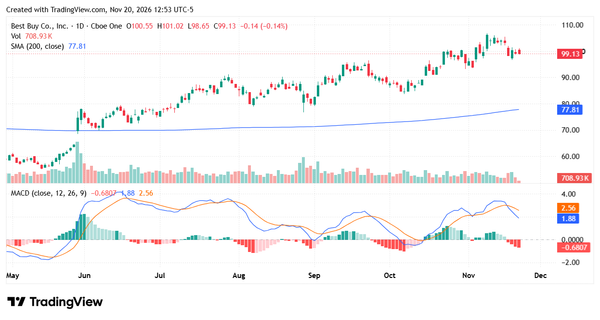
UBS reiterated a neutral rating but raised its price target to $103 from $90 a share. Stifel initiated a hold rating on the stock with a $100 price target. Wells Fargo just raised its price target to $95 from $85 in early November. Citi raised its price target to $102 per share from $88. Evercore raised its price target to $100 from $95. And analysts at Truist reiterated a buy rating with a price target of $100 per share from $85.
Other than that, the company’s first read on Black Friday could tell investors how much it’s costing the retailer to get shoppers to spend. If customers are upgrading laptops and TVs without waiting for the steepest discounts, Best Buy has a better shot at turning higher holiday sales into higher profits.
Wall Street already expects sales and earnings to grow, and several analysts have raised their price targets heading into the report. If Best Buy beats estimates on Tuesday but signals that it needs deeper discounts to keep sales moving through December, the stock could still come under pressure. If management sees steady demand and expects holiday margins to hold up, investors will have more reason to trust the higher profit forecast Best Buy issued in August.
Ultimately, Best Buy’s earnings report is about more than whether the retailer beats its quarterly estimates. Investors want evidence that the holiday shopping season can deliver profitable growth, giving the company a chance to finish fiscal 2027 on stronger footing.
Leave a Reply