
The stock market is about to get a lot more hours – and that could mean a very different volatility game. For decades, equities have operated around a clock. The bell rings, liquidity floods in, price discovery accelerates, and the market shuts down. Then the world keeps moving while stocks wait for the next session.
Table of Contents
Tokenization threatens to break that routine. On September 17, the SEC granted qualifying Tokenized Securities Venues a temporary five-year exemption allowing them to trade tokenized NMS stocks through permissioned automated market makers and liquidity pools. The tokenization framework is deliberately limited, with symbol and volume caps, investor protections, and a requirement that tokenized shares stop trading when the underlying stock is halted.
So this isn’t the U.S. stock market suddenly becoming crypto. It’s a regulatory test of what happens when stocks move onto rails that can operate around the clock.
And for traders, the biggest change may not be where stocks trade, but when they trade.
24/7 Trading Doesn’t Mean 24/7 Liquidity
A study of tokenized stocks and funds found that trading activity remains heavily concentrated around the hours when the underlying exchange is open, even though investors can trade the tokenized assets around the clock. And that price gaps widen outside core market hours, consistent with limits to arbitrage.
That makes sense. You can keep the market open at 2 a.m., but you can’t manufacture a deep pool of buyers and sellers simply by leaving the door unlocked…which creates a weird setup for price discovery. Overnight news can hit while the traditional market is closed, tokenized versions can react, but the liquidity supporting those prices may be thinner. A large order can push the token further than the same order would during the U.S. session.
Now put that into the S&P 500. If tokenized versions of major companies start trading around the clock, their combined moves could become an increasingly useful overnight signal for where SPY and the S&P 500 Index (SPX) should open. Instead of waking up to one giant opening gap after a major headline, traders could watch price discovery develop through the night.
But there is another possibility: those overnight prices become noisy enough to create larger temporary dislocations.
Tokenization Could Shift Where Stock Market Volatility Happens
This is where the research gets especially useful for traders because another study found that higher volatility and weaker integration between tokenized assets and their underlying equities are associated with larger tracking errors, with stronger mis-tracking among high-beta companies. The study found average tracking errors close to 3%, rising above 4% for its least-liquid group. Imagine a major macro headline hits at 2:30 a.m.
A tokenized high-beta stock sells off sharply while the underlying exchange is closed. Arbitrageurs step in, but liquidity is thin. The token doesn’t immediately converge with the traditional market because there isn’t enough capital willing to close the gap.
By 9:30 a.m., the underlying stock finally opens. Now you have an overnight price signal, a traditional market opening print, and potentially a completely different liquidity environment colliding within hours.
For SPY, that could eventually mean smaller opening surprises if overnight trading efficiently absorbs information. For SPX and its options market, it could also mean traders have a much richer stream of information before the opening bell.
The catch is that a continuously available price isn’t automatically a perfectly reliable price.
That’s exactly why traders should watch volume, spreads and the size of deviations between tokenized assets and their underlying shares, rather than treating every overnight print as gospel.
Three Stocks Building the Future of Tokenized Markets
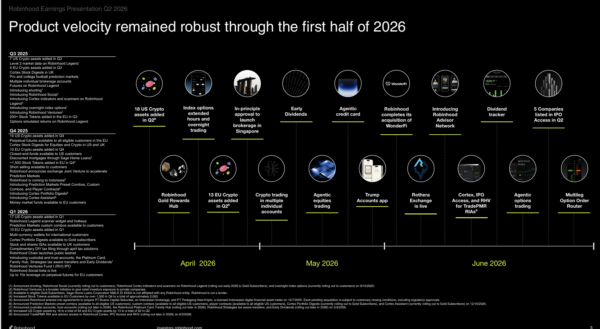
Robinhood Markets (NASDAQ: HOOD) is sitting closest to the retail distribution layer. Robinhood’s own blockchain documentation says its Stock Tokens represent specific underlying equities or ETFs and can be held in self-custodied wallets around the clock.
That gives HOOD a direct way to monetize the shift: more tradable hours can mean more trading activity, more customer engagement and more transactions running through Robinhood’s ecosystem. If tokenized equities become a normal way for retail traders to react to overnight news, HOOD already has the wallet, audience and trading interface sitting in front of them.
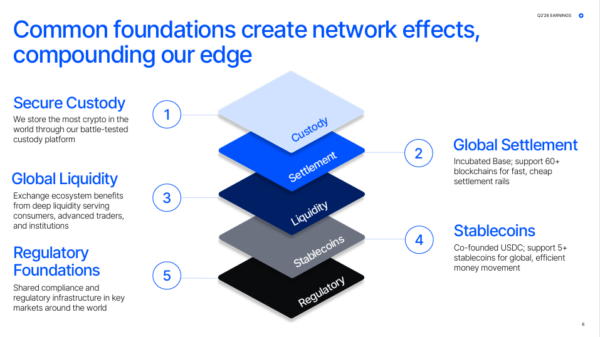
Coinbase Global (NASDAQ: COIN) attacks the problem from the other side. Coinbase’s tokenization platform now markets the ability to trade, lend and borrow tokenized stocks 24/7 across the Base ecosystem, while its research has identified 24/7 access and near-instant settlement as core attractions of tokenized equities. For COIN, the upside is that every tokenized stock can become another asset trading on crypto-native infrastructure, creating additional activity across trading, custody and on-chain financial services as this market expands.
Then there is Nasdaq Inc. (NASDAQ: NDAQ), which gives this story a completely different angle.
Wall Street doesn’t have to surrender the market to crypto-native platforms. Nasdaq is building into it. The exchange operator agreed to invest $100 million in Payward, Kraken’s parent, while advancing its Nasdaq Equity Tokens framework and infrastructure for always-on markets. Nasdaq expects to launch its Equity Tokens in the second quarter of 2027.
So unlike HOOD and COIN, NDAQ can monetize the infrastructure behind the market itself as trading shifts toward tokenized securities and always-on liquidity.
The Market May Never Close The Same Way Again
The mistake here would be assuming tokenization simply means “stocks trade 24/7.” The bigger shift is that price discovery can start happening before the traditional market is ready to absorb it.
That could eventually give traders better information before the opening bell, but it could also create new gaps when overnight liquidity is thin, arbitrage is expensive and high-beta names start moving harder than their underlying shares can immediately follow.
HOOD, COIN and NDAQ give investors three different ways to play that infrastructure shift.
For traders, though, the bigger opportunity may be watching what happens to SPY, SPX and the options market when the bell stops being the moment when stock prices suddenly wake up.
Leave a Reply