
Chewy (NYSE: CHWY) heads into its September 9 earnings report with investors looking for signs that the beaten-down pet retailer may be able to turn the ship around.
Table of Contents
Bank of America (NYSE: BAC) is taking the bullish side of that debate. In fact, analyst Michael McGovern recently reiterated a Buy rating on Chewy and maintained a $31 price target. He believes improving pet-industry spending trends could provide a better backdrop for the company heading into the second half of the year.
More importantly, McGovern sees several opportunities for Chewy to expand its margins through advertising, healthcare services and automation. “Net/net, we remain constructive on steady compounding earnings growth driven by margin expansion from ads, Health/CVC, & automation/AI,” McGovern said, as quoted by TradingView.com.
CHWY Has Had a Rough Year
Chewy shares are down roughly 27% year-to-date in 2026.
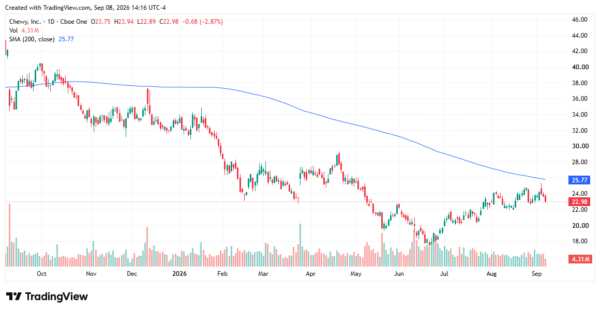
The decline has been driven in part by the company’s full-year guidance reduction in June, along with concerns that consumers could pull back on discretionary spending. Investors are also questioning whether Chewy can return to stronger sales growth and maintain its position in the highly competitive pet-retail market.
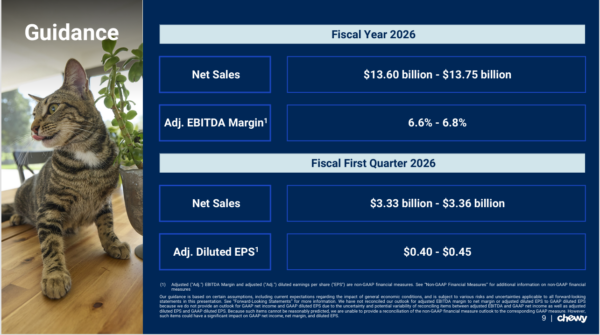
While Wall Street isn’t expecting big numbers, they are looking for second-quarter earnings of about 18 cents per share, which would represent roughly 29% year-over-year growth. Revenue is expected to come in at approximately $3.32 billion, up about 7.1%. Those numbers suggest that earnings growth could be considerably stronger than revenue growth.
And that may be exactly what investors should be watching.
Pet Spending May Be Starting To Improve
There is also evidence that the overall pet industry remains healthy.
According to the American Pet Products Association, U.S. pet-industry spending reached $158 billion in 2025, up 3.7%. The organization expects the market to reach $165 billion in 2026.
APPA also reported that 95 million U.S. households owned at least one pet in 2025.
At the same time, consumers are becoming more selective. About half of pet owners said their spending was unchanged in 2025, while 22% reported spending less.
That creates a mixed picture, but it’s not necessarily a bad one for Chewy.
Key Numbers Investors Should Watch
When Chewy reports on September 9, investors should pay close attention to several areas.
Net sales growth will show whether the company is benefiting from improving conditions in the broader pet category. Active customers will provide a clearer picture of whether Chewy is attracting and retaining shoppers. Auto ship penetration is important because recurring purchases can provide a more predictable revenue stream and improve customer retention.
And perhaps most importantly, investors should watch gross margin.
If Chewy can continue expanding margins while maintaining steady revenue growth, earnings could grow considerably faster than sales.
Management’s Updated Full-Year Outlook Will Also Be Critical.
There is still plenty that could go wrong.
Another reduction to full-year guidance would likely reinforce concerns that Chewy’s slowdown is more structural than temporary. Investors will also want to see evidence that Chewy isn’t losing meaningful market share to competitors. If sales remain sluggish and margins fail to improve, the bullish argument becomes much harder to make.
For now, Bank of America is betting that the market has become too pessimistic.
The argument isn’t that Chewy suddenly becomes a high-growth stock. Instead, it’s that the company’s roughly 27% decline may already reflect a significant amount of bad news, while early signs from the broader pet industry suggest demand could be stabilizing.
That makes the September 9 earnings report an important test.
If Chewy can show improving customer trends, relatively healthy pet spending and continued margin expansion, investors may start looking beyond the company’s slower top-line growth and toward its earnings potential.
Leave a Reply