
One of the biggest catalysts supporting Buy Now, Pay Later, or BNPL is the financial pressure facing consumers. U.S. household debt stood at approximately $18.8 trillion during the second quarter of 2026. Credit-card balances climbed by $21 billion during the quarter to roughly $1.26 trillion, according to the Federal Reserve Bank of New York.
Table of Contents
Consumers are also saving less. The personal saving rate fell to approximately 3% in July, according to the Bureau of Economic Analysis. That combination of high debt, expensive credit cards and limited savings can make smaller installment payments look especially attractive.
One industry forecast estimated that the global BNPL market could grow from about $156.6 billion in 2023 to more than $1 trillion by 2028. For investors, there are two ways to approach this trend. They can buy a leading BNPL company such as Affirm Holdings, or they can spread their risk across several financial-technology businesses through an exchange-traded fund.
Affirm Holdings Remains the Top BNPL Trade
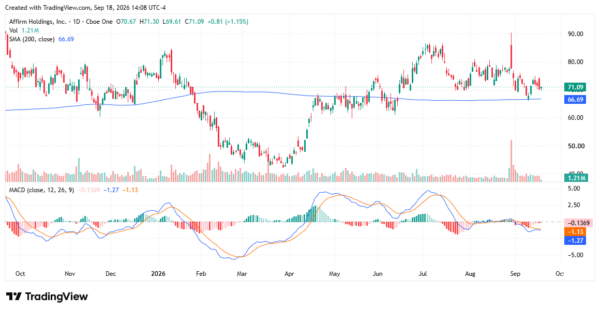
One of the top ways to trade the trend is with Affirm Holdings (NASDAQ: AFRM), which remains one of the most direct ways to trade the BNPL expansion.
Just look at earnings growth for the reason why. Affirm recently delivered an impressive fiscal fourth quarter. Revenue increased 33% year over year to approximately $1.17 billion. Gross merchandise volume (GMV)—the total value of purchases made through Affirm—jumped 36% to $14.06 billion.
For the full fiscal year, GMV reached $50.17 billion, representing 37% growth. Management now expects fiscal 2027 GMV to exceed $64 billion.
Those numbers suggest that Affirm is doing more than simply riding a temporary consumer trend. The company is building a larger payment network involving shoppers, retailers and funding partners. As more merchants offer Affirm, the service becomes useful to more consumers. As more consumers use it, additional merchants have an incentive to join.
That network effect could become an important competitive advantage.
Affirm is also expanding internationally. Its partnership with Shopify is bringing Shop Pay Installments to Australia, giving the company another route into a potentially valuable market.
BPAY Offers a More Diversified Approach
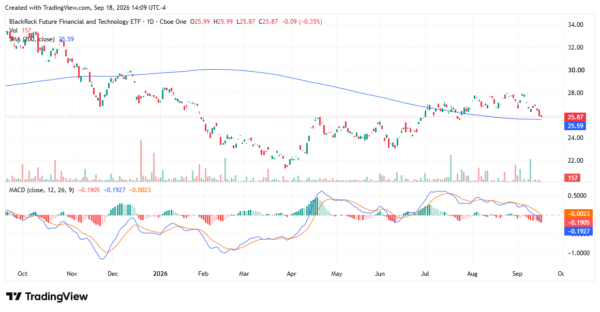
Investors who like the fintech trend but do not want their results tied to one company could consider the iShares FinTech Active ETF (NYSEARCA: BPAY).
BPAY invests across the financial-technology ecosystem, including digital payments, banking, investment platforms, insurance technology and financial software. The fund held 36 positions as of September 16, 2026, and charged a net expense ratio of 0.55%.
Diversification is the ETF’s main advantage. If one BNPL provider loses market share or suffers higher loan losses, stronger performance from another holding could help offset some of that weakness.
However, BPAY is not a pure BNPL fund. It also owns businesses operating in other areas of finance, which means it may not rise as quickly as Affirm during a powerful BNPL rally. It is also an actively managed, relatively small ETF with light trading volume. Investors should consider using limit orders to avoid paying more than expected.
Two Ways to Trade the Growing BNPL Opportunity
BNPL has the potential to remain one of the financial industry’s strongest long-term growth themes. Consumers appreciate payment flexibility, merchants want tools to increase sales, and fintech companies continue to integrate installment lending into larger digital payment platforms. Affirm offers a more concentrated opportunity, along with greater volatility and credit risk. BPAY provides broader exposure and reduces dependence on the performance of a single company.
Aggressive investors may prefer Affirm, while those seeking diversification may find BPAY more appropriate. Either way, the opportunity should be approached with discipline. A growing industry does not guarantee that every company—or every stock—will be a winner.
Leave a Reply