
SpaceX (NASDAQ: SPCX) is about to join the Nasdaq-100, just weeks after completing one of the largest initial public offerings (IPOs) in market history. While becoming part of the prestigious stock index is an important achievement on its own, it could also have a significant impact on the company’s share price in both the short and long term.
Table of Contents
For investors, the next big question is: What happens next?
The answer lies in understanding how the Nasdaq-100 works and why inclusion often creates a wave of buying pressure.
How Index Funds Create Automatic Buying Pressure
The Nasdaq-100 is made up of 100 of the largest non-financial companies listed on the Nasdaq stock exchange. It includes many of the world’s biggest technology and growth companies, and it serves as the benchmark for hundreds of billions of dollars invested through exchange-traded funds (ETFs), index funds, and mutual funds.
These investment funds are designed to match the performance of the Nasdaq-100 as closely as possible. To do that, they must own shares of every company in the index. Whenever a new company is added, those funds are required to buy the stock regardless of whether they believe it is undervalued or overvalued. That automatic buying is one of the biggest reason investors pay close attention to index additions.
According to analysts, funds that track the Nasdaq-100 could purchase roughly $4.3 billion worth of SpaceX shares after the company officially joins the index. That represents a massive amount of demand arriving over a relatively short period.
History Suggests the Rally May Be Temporary
History shows that many companies experience a short-term boost around the time of index inclusion before the excitement fades and normal market forces begin to drive the stock once again. Once index funds complete their purchases, buying pressure typically slows, leaving investors to focus on the company’s earnings, growth prospects, and broader market conditions. In short, while joining the Nasdaq-100 can create a powerful catalyst, it does not guarantee long-term gains.
SpaceX’s Small Public Float Could Amplify Volatility
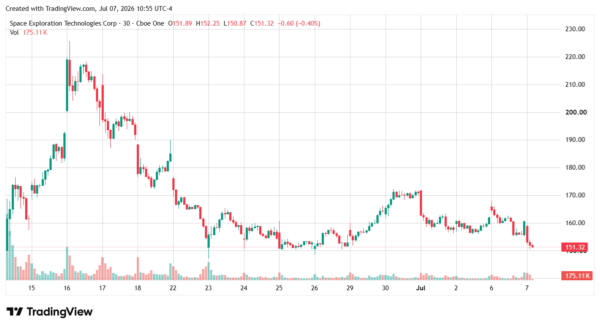
What makes SpaceX’s situation even more interesting is the company’s unusually small public float. Although SpaceX has a market valuation exceeding $2 trillion, only about 4.3% of its outstanding shares are currently available for public trading following its IPO. The remaining shares are largely held by company insiders, founders, and early investors.
A small public float means there are relatively few shares available for investors to buy and sell on the open market. When demand suddenly increases, the limited supply can make prices move much more dramatically than they would for a company with a larger float.
Why Limited Supply Can Drive Bigger Price Swings
Imagine thousands of institutional investors trying to purchase billions of dollars’ worth of shares while only a small percentage of the company is actually available for trading.
Competition for those shares can quickly push prices higher as buyers bid against one another. Retail investors should keep this in mind before chasing a rally fueled by index inclusion. Still, joining the Nasdaq-100 represents another significant milestone for SpaceX. It reflects the company’s rapid rise in the public markets and places it alongside many of the world’s largest and most influential growth companies.
For investors, the coming weeks could be marked by increased trading activity and above-average volatility as institutional funds adjust their portfolios. Whether that results in a lasting rally or simply a temporary spike remains to be seen.
What Comes Next After SpaceX Joins the Nasdaq-100
SpaceX’s entry into the Nasdaq-100 is likely to attract significant attention from both Wall Street and individual investors.
With billions of dollars expected to flow into the stock and only a small percentage of shares available for trading, the conditions are in place for potentially dramatic price movements. So, again, be careful if you decide to jump into SpaceX on inclusion news. As noted above, once index funds complete their purchases, buying pressure typically slows, leaving investors to focus on the company’s earnings, growth prospects, and broader market conditions.
Leave a Reply