
Quantum computing is widely viewed as one of the most transformative technologies of the coming decade. Its ability to solve extraordinarily complex problems at speeds unimaginable for today’s computers could reshape industries ranging from healthcare and finance to artificial intelligence and scientific research.
Table of Contents
According to AI Magazine, quantum computers could solve certain computational problems up to 100 million times faster than conventional computers. In one widely cited demonstration, a quantum computer completed a specialized calculation in roughly 200 seconds—a task researchers estimated would have required one of the world’s fastest supercomputers approximately 10,000 years to complete.
Artificial intelligence models could become significantly more sophisticated. Financial institutions could improve risk analysis and portfolio optimization. Manufacturers could develop next-generation batteries and advanced materials far more quickly than current technology allows. Pharmaceutical companies could accelerate drug discovery. Artificial intelligence models could become significantly more sophisticated. Financial institutions could improve risk analysis and portfolio optimization. Manufacturers could develop next-generation batteries and advanced materials far more quickly than current technology allows.
The Dark Side of Quantum Computing
The same things that make quantum computers revolutionary also threaten many of today’s encryption methods.
Unfortunately, quantum computing also has the potential to undermine the digital security systems that protect everything from online banking and government networks to cryptocurrencies and personal data.
One of the biggest cybersecurity risks associated with quantum computing is a strategy known as “harvest now, decrypt later.” Rather than immediately attempting to crack encrypted information, cybercriminals and nation-state actors can collect and store encrypted data today with the expectation that future quantum computers will eventually become powerful enough to decrypt it.
For organizations handling sensitive information—including financial institutions, healthcare providers, defense contractors, and cryptocurrency exchanges—this creates a long-term security challenge. Data stolen today could remain unreadable for years before suddenly becoming accessible.
What Is Q-Day?
Within the cybersecurity industry, this future milestone has earned a name: “Q-Day.”
Q-Day refers to the point at which quantum computers become capable of breaking today’s widely used public-key encryption standards. While experts continue to debate exactly when that moment will arrive, many believe organizations cannot afford to wait until it happens before upgrading their security infrastructure.
In response, governments and technology companies are already moving toward post-quantum cryptography, a new generation of encryption algorithms specifically designed to withstand attacks from both classical and quantum computers. Organizations that delay implementation could face increased exposure to harvest-now, decrypt-later attacks, particularly if they store highly sensitive data intended to remain confidential for decades.
Cybersecurity ETFs That Could Benefit
This transition is expected to create substantial investment opportunities across the cybersecurity industry. All of which could be beneficial for cybersecurity ETFs such as:
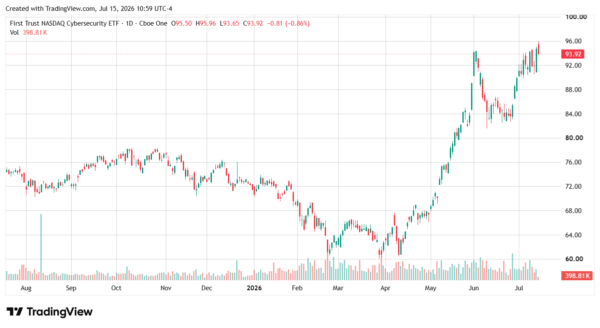
First Trust NASDAQ Cybersecurity ETF (NASDAQ: CIBR) is one of the largest and most established cybersecurity ETFs. It holds a diversified portfolio of leading cybersecurity companies involved in endpoint protection, cloud security, identity management, and network defense. As organizations invest in quantum-resistant security technologies, many of these firms could benefit from increased enterprise spending.
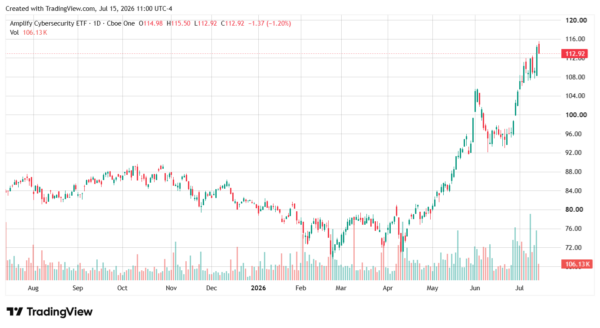
ETFMG Prime Cyber Security ETF (NYSEARCA: HACK) provides another diversified approach to the sector. The fund includes companies specializing in cybersecurity software, infrastructure protection, hardware security, and managed security services. With cybersecurity spending already growing due to ransomware, AI-driven threats, and geopolitical tensions, the arrival of quantum computing could represent another major catalyst for long-term industry demand.
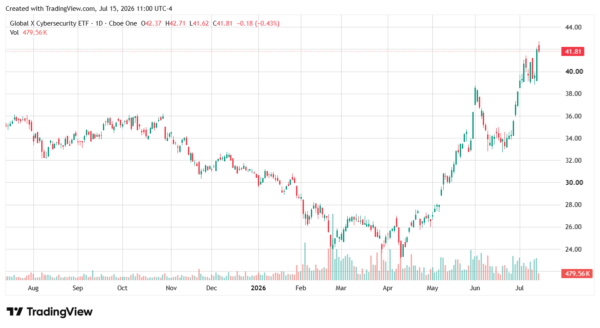
Global X Cybersecurity ETF (NASDAQ: BUG) offers concentrated exposure to companies developing advanced cybersecurity technologies, including cloud security, threat detection, identity verification, and network protection. Many of its holdings are positioned to help organizations transition toward more sophisticated security architectures capable of defending against emerging quantum-era risks.
The Bottom Line
Governments and corporations are already preparing for a post-quantum world. That preparation is likely to require billions of dollars in investment as companies replace vulnerable encryption standards with quantum-resistant alternatives.
Leave a Reply