
One of the best ways to retire rich is by investing in dividend stocks. To do so, you need to aggressively invest in high-yielding stocks and reinvest the dividends continuously until you consider retirement. After all, each reinvested dividend payout buys you more income-producing shares without any out-of-pocket expenses. Better, by doing so, you’re compounding the earnings and expediting the growth of your portfolio.
Table of Contents
In fact, here are three high-yielding stocks that could give your portfolio a boost.
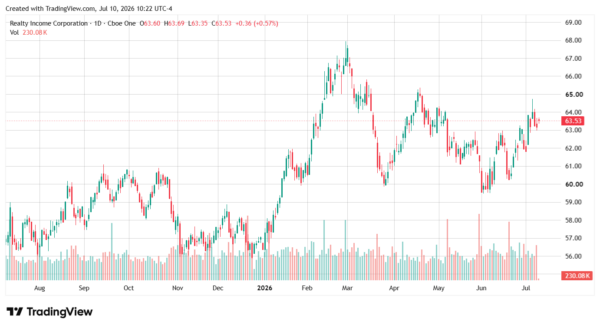
Realty Income: A Reliable Monthly Dividend Leader
With a yield of 5.13%, the real estate investment trust (REIT) Realty Income (NYSE: O), otherwise known as The Monthly Dividend Company, just declared its 673rd consecutive common stock monthly dividend. The dividend of $0.2710 per share, is payable on August 14, 2026 to stockholders of record as of July 31, 2026.
Earnings have also been solid. In its most recent quarter, the company posted funds from operations (FFO) of $1.13, which beat by three cents. Revenue of $1.55 billion, up 12.3% year over year, beat by $160 million.
And, as noted by CEO Sumit Roy, “Given the strong momentum across the business, we are increasing our 2026 AFFO per share guidance range to $4.41 to $4.44, reflecting projected annual per share growth of 3.0% to 3.7%. Our outlook is a testament to the unmatched scale, track record and operating capabilities of our global net lease enterprise.”
EPR Properties Offers High Yield and Growth Potential
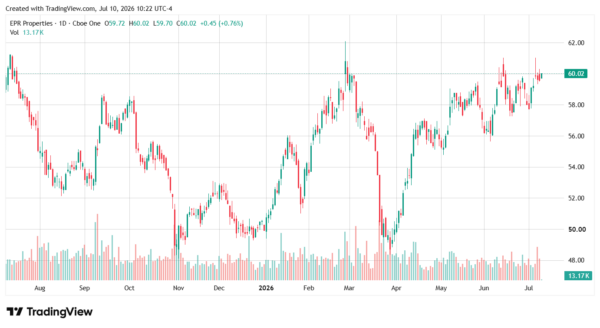
We can also look at EPR Properties (NYSE: EPR).
With a yield of 6.04%, EPR Properties is a REIT that invests in amusement parks, movie theaters, ski resorts and other entertainment properties. The company will pay a dividend of 31 cents per share on July 15 to shareholders of record as of June 30.
Earnings were solid here, too. Q1 FFO of $1.29 beat by four cents. Revenue of $181.25 million, up 3.6% year over year, beat by $1.32 million. The company also boosted its full-year guidance, now expecting adjusted FFO of $5.37 to $5.53, as compared to the analyst estimate of $5.39, and as compared to its prior outlook at $5.18 to $5.48.
“We are pleased with our first quarter results, including strong earnings growth and the momentum we have established in executing our growth strategy,” stated Company Chairman and CEO Greg Silvers. “We deployed over $50 million during the quarter, and subsequent to quarter-end completed the acquisition of six high-quality regional parks with strong fundamentals and compelling long-term value creation potential.”
STAG Industrial Benefits From E-Commerce Demand
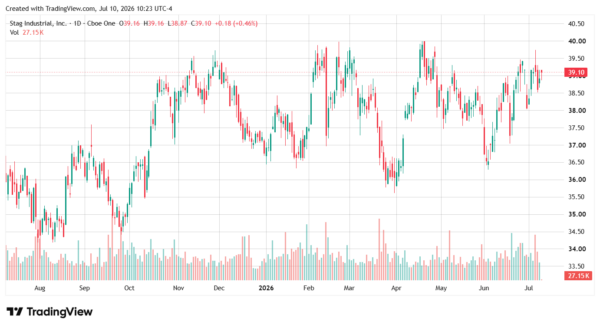
With a yield of 3.59%, Stag Industrial (NYSE: STAG) is a REIT that leases industrial properties, such as warehouses and distribution centers, to e-commerce companies. Better, it’s also benefiting from consumers shifting to online shopping. The REIT also paid a dividend of just over 38 cents per share on April 15.
It’s Q1 FFO of 65 cents beat by a penny. Revenue of $224.21 million, up 9% year over year, best by $1.86 million. “STAG delivered strong first quarter results driven by healthy leasing activity, disciplined capital allocation, and a growing acquisition pipeline,” said Bill Crooker, President and Chief Executive Officer of the Company. “These results set a solid foundation for 2026 and we remain well positioned to capitalize on opportunities.”
Which High-Yield Dividend Stock Is Right for Your Portfolio?
High-yield dividend stocks can play an important role in building long-term wealth, especially when investors consistently reinvest their payouts. Realty Income, EPR Properties, and STAG Industrial each offer strong dividend yields, solid operating performance, and exposure to real estate sectors with favorable long-term demand trends.
In addition, these REITs have demonstrated an ability to generate reliable cash flow and return capital to shareholders through regular dividend payments. For investors with $5,000 to put to work today, these three dividend stocks could provide an attractive combination of passive income, portfolio stability, and long-term total return potential.
Leave a Reply