
SpaceX may be one of the most exciting IPOs to hit the market. Aiming to sell 555.6 million shares at $135 apiece for a potentially record-breaking public offering, it won’t be cheap. While exciting, some analysts urge extreme caution. In fact, according to Morningstar, the company is worth less than half of its expected valuation.
Table of Contents
“We think the company has been significantly overvalued and investors will have opportunities to buy the stock at more attractive levels after the IPO,” Morningstar analysts said, as quoted by CNBC. “Morningstar’s discounted cash flow valuation of SpaceX is $780 billion, which is roughly 48% below its private market valuation of $1.5 trillion.”
Of course, that won’t stop retail investors from flocking to the IPO on day one.
For those who want to avoid the Day One chaos, exchange-traded funds (ETFs) are another, “safer” way to trade the IPO. Here are three options to consider.
A Diversified Approach to the IPO Market
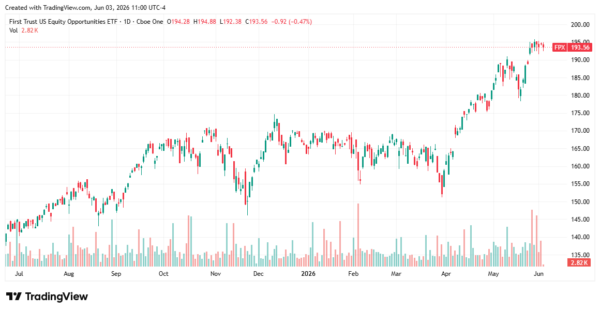
When we first highlighted the First Trust US Equity Opportunities ETF (NYSEARCA: FPX) with the SpaceX opportunity, it traded at about $165. Today, it’s up to $194.48.
With an expense ratio of 0.61%, the FPX tracks hot IPOs, giving investors access to new stocks during their initial, most crucial days on the market. By buying it, not only can you avoid paying gobs of money for IPOs that may or may not work out, but you’re also being exposed to multiple hot IPOs at the same time at a lesser cost.
Even with its share of high-profile IPO disappointments, FPX has delivered strong long-term gains, climbing from around $11 in 2009 to recent highs near $195. The key advantage is simple: whether individual IPOs succeed or fail, the overall excitement and capital inflows into the IPO market tend to support the ETF over time.
With the FPX, it doesn’t matter if the stock is hot or a dud; the excitement surrounding IPOs continues to send the FPX to new highs.
A Focused Play on Recent Public Listings
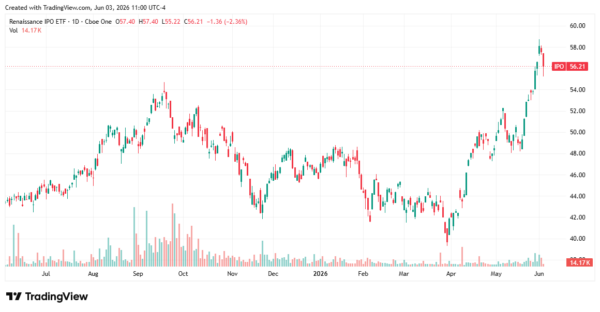
When we first highlighted the Renaissance IPO ETF (NYSEARCA: IPO) with the SpaceX opportunity, it traded at about $46. Today, it’s up to $57.57.
With an expense ratio of 0.6%, the ETF provides “investors with the largest, most liquid US-listed newly public company stocks in one security, reducing the risk of single-stock ownership while avoiding overlap with major core indices for optimal diversification across markets and time,” as noted by Renaissance Capital.
Since November 2023, the ETF has rallied from a low of about $30 to its current price of $57.57. From here, we’d eventually like to see the ETF rally back to $60 a share.
A Venture Capital Approach for Public Investors
There’s also the Fundrise Innovation Fund (NYSE: VCX), which, after bottoming out at around $75 in May, now trades at $192.59. The publicly traded venture capital fund offers everyday investors indirect exposure to SpaceX, which makes up a portion of its portfolio, alongside other private tech giants such as Anthropic and OpenAI.
A More Measured Path to SpaceX Participation
While SpaceX’s IPO could generate a good deal of excitement, investors should be mindful of the risks that often accompany high-profile public offerings.
Rather than chasing shares on day one at potentially inflated valuations, investors may be better served by gaining exposure through diversified vehicles such as FPX, IPO, or the Fundrise Innovation Fund. Each offers a way to participate in the growth of innovative companies while reducing the single-stock risk that can come with even the most anticipated IPOs. As history has shown, patience and diversification often prove to be the more profitable strategy.
Investors should also remember that some of the strongest long-term returns come after the initial excitement fades and valuations become easier to assess. Whether SpaceX exceeds expectations or struggles to justify its lofty pricing, diversified investment vehicles can provide a more balanced way to participate in one of the market’s most closely watched growth stories.
Leave a Reply