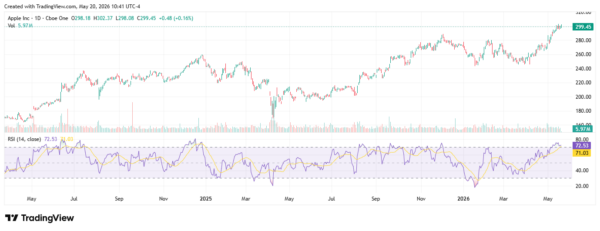
Investors may want to avoid Apple (NASDAQ: AAPL) in the near term. Over the last few weeks, AAPL stock surged from roughly $245 to an all-time high near $303. The rally was fueled by exceptional quarterly earnings, stronger-than-expected guidance, a massive $100 billion share buyback program, and solid demand for the iPhone 17 across both the U.S. and China markets.
Table of Contents
Apple’s latest earnings report was truly impressive. The company posted quarterly revenue of $111.18 billion, representing 17% year-over-year growth and beating analyst estimates of $109.66 billion. Earnings per share came in at $2.01, comfortably ahead of Wall Street expectations of $1.95 per share. Investor sentiment strengthened significantly.
Looking ahead, the company expects revenue growth between 14% and 17% year over year, well above analyst expectations for approximately 9.5% growth. Still, despite the bullish momentum, investors may want to wait for AAPL to pull back first.
Apple’s Valuation is Expensive
One of the biggest concerns surrounding Apple right now is valuation.
Analysts at KeyBanc Capital Markets recently argued that Apple’s valuation appears “stretched,” warning that consumer spending trends may be showing early signs of slowing after several years of extraordinary growth.
According to the analysts, U.S. consumer demand for Apple hardware is beginning to normalize and return to more traditional seasonal buying patterns. That could indicate the end of the unusually strong upgrade cycle that helped drive Apple’s premium valuation higher over the last several years.
The analysts also noted that future growth could increasingly depend on international markets, particularly China, where competition is becoming much more intense.
In addition, the tech giant trades at about 36 times earnings, which sits above its historical five-year valuation range of roughly 30x to 35x earnings. More importantly, Apple’s valuation now stands nearly 43% above the broader technology sector average of around 25 times earnings.
For many investors, that premium may be difficult to justify, especially in a market where elevated interest rates and slowing consumer spending continue to pressure growth stocks.
Technical Indicators Suggest AAPL Is Overbought
Technically, AAPL stock also appears overheated.
Shares are trading near all-time highs, and several popular momentum indicators suggest the rally may be overextended. Indicators such as the Relative Strength Index (RSI), MACD, Williams’ %R, and Full Stochastics all point toward overbought conditions.
Historically, when stocks become this technically stretched, short-term pullbacks or periods of consolidation often follow. That does not necessarily mean AAPL’s long-term story is broken, but it could indicate limited upside in the near term.
China Remains a Growing Risk for Apple
China continues to represent both a major opportunity and a growing challenge for Apple.
The company recently cut prices on its iPhone 17 Pro models in China by roughly 1,000 yuan in an effort to remain competitive. The move highlights increasing pressure from domestic smartphone makers, particularly Huawei.
Huawei has rapidly regained market share in China and recently captured the top position in the country’s smartphone market, marking its highest market share in five years. Increased competition could pressure Apple’s margins and reduce future growth opportunities in one of its most important international markets.
At the same time, Apple is facing rising component costs. CEO Tim Cook recently warned that prices for DRAM and NAND memory chips could become “significantly higher” in upcoming quarters. Those rising input costs may create margin headwinds moving forward.
The Bottom Line on AAPL Stock
There is no question that Apple remains one of the highest-quality companies in the world. The company continues to generate enormous cash flow, produce industry-leading products, reward shareholders through buybacks, and deliver consistent earnings growth.
However, as we speak, Apple is expensive relative to its historical valuation. That being said, we would avoid AAPL in the near term and wait for pullbacks before buying.
Leave a Reply