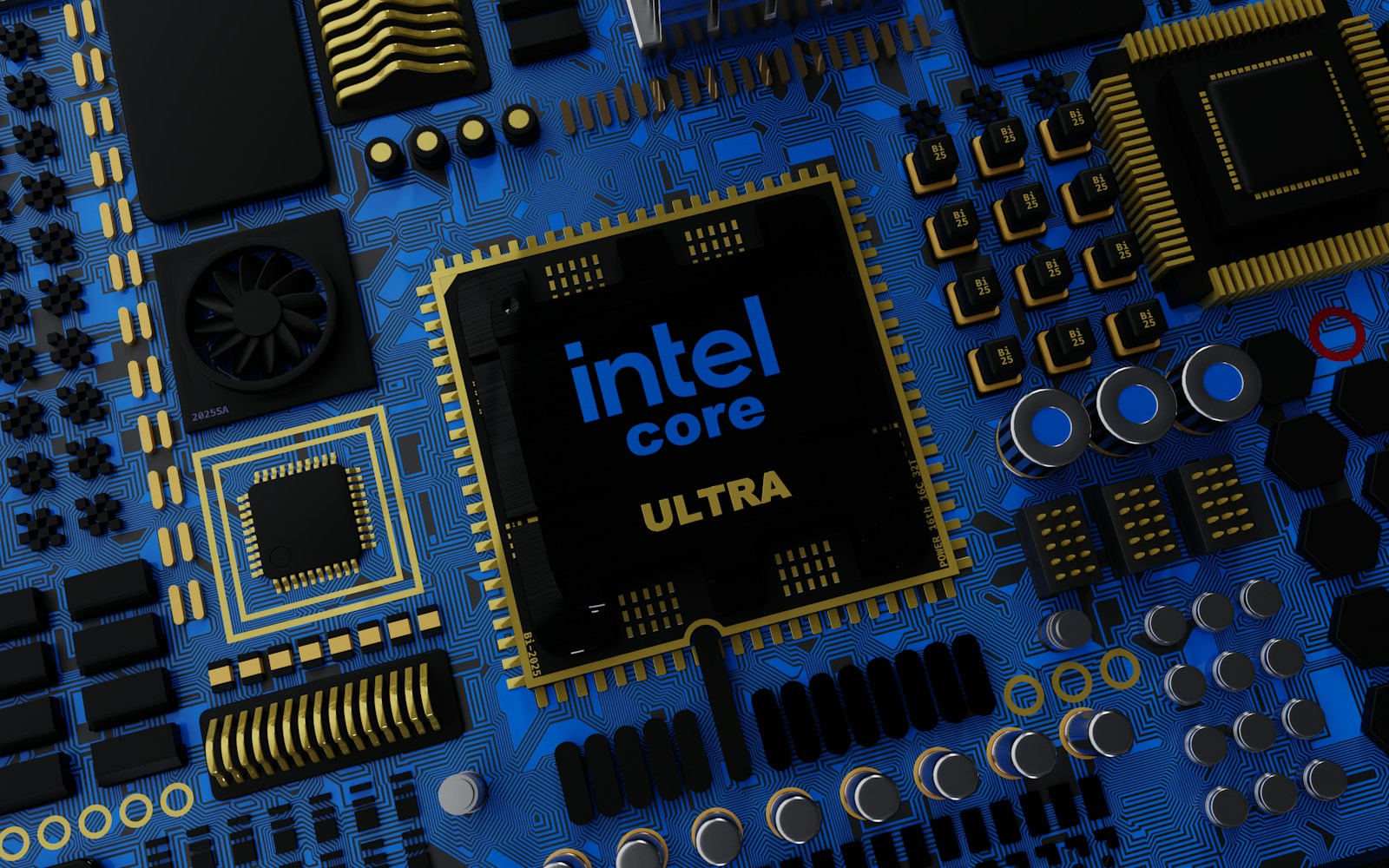
Investors should always pay attention to earnings, including a company’s guidance. That’s particularly true for technology stocks like Intel Corp. (NASDAQ: INTC).
Table of Contents
There are reasons why earnings reports are one of the fundamental drivers of long-term stock value. They reveal a company’s profitability, efficiency, and financial health. That, in turn, directly impacts stock prices through growth, dividends, or buybacks, signaling future potential and overall market trends.
It’s also critical to focus on forward guidance, especially for technology stocks. In a sector where valuations often reflect future growth more than current profits, management commentary can matter as much, if not more, than the headline numbers.
That dynamic will be on full display later this week, with Intel’s earnings report acting as a potential catalyst for the broader tech sector. Expected after the bell on Thursday, Intel is expected to post adjusted EPS of eight cents a share on revenue of $13.42 billion for the fourth quarter of 2025. Granted, that would be down from earnings of 13 cents a share on revenue of $14.26 billion for the year-earlier period.
At first glance, those year-over-year declines may not appear inspiring. However, analysts are bullish.
“We expect Intel to report better results and slightly higher guidance, supported by strong server CPU demand as customers upgrade to Granite Rapids, and visibility that server CPU supply is nearly sold out through 2026,” wrote KeyBanc analysts, as quoted by Barron’s.
If Intel delivers even modestly better guidance, or signals accelerating momentum in data center and AI-related workloads, it could go a long way toward restoring confidence in the legacy chipmaker. Given Intel’s size and influence, a positive surprise could ripple across the semiconductor space and help lift tech stocks more broadly.
Block Faces a Confidence Test
Investors will also be watching Block Inc. (NYSE: XYZ), which is scheduled to report fourth-quarter earnings on February 19.
The fintech company, which builds integrated ecosystems across commerce, financial products, and services, is expected to post earnings of $0.26 per share—consistent with the prior year’s results. Revenue is projected to range between $6.23 billion and $6.48 billion.
In the third quarter, Block reported EPS of $0.54, which fell short of expectations by $0.14. Revenue totaled $6.11 billion, representing 2.2% year-over-year growth but missing consensus estimates by approximately $200 million.
Despite the miss, management raised its full-year 2025 outlook, underscoring confidence in the company’s longer-term growth trajectory. Block now expects full-year gross profit of $10.243 billion, implying 15% year-over-year growth, and adjusted operating income of $2.056 billion, representing a 28% increase from the prior year.
Management highlighted continued momentum across its core platforms. Square GPV growth accelerated to 12%, driven by product innovation and expanded distribution, enabling the company to gain profitable market share.
Cash App’s gross profit growth accelerated to 24%, while monthly active users reached 58 million in September. In addition, Proto generated its first revenue, marking an early but important step toward what management believes could become Block’s next major ecosystem.
Roblox Delivers Growth, Not Profits
Roblox Corp. (NYSE: RBLX) is another name investors are keeping an eye on, particularly after a surprisingly strong third quarter.
Last quarter, Roblox surprised to the upside. Third-quarter sales and earnings results both topped expectations, with revenue growing 48% year over year to $1.36 billion.
Unfortunately, even with those numbers, the company still wasn’t profitable. In fact, it had a loss of 37 cents per share, which was 14 cents better than expected, but it was still a loss, with no clear path to profitability.
Looking ahead to the fourth quarter, Roblox expects revenue of $1.35 billion to $1.4 billion, representing growth of 37% to 42%. The company also anticipates a net loss of between $345 million and $375 million for the quarter.
For the full year, 2025 bookings are expected to range from $6.566 billion to $6.616 billion, indicating growth of between 50% and 51%. Roblox also projected a consolidated net loss ranging from $1.099 billion to $1.129 billion for the year.
Conclusion
In short, each of these companies faces its own challenges. Intel is working to regain relevance and momentum, Block is balancing ecosystem growth with execution risk, and Roblox continues to prioritize expansion over profitability. Still, improving guidance, strong demand trends, and long-term growth narratives suggest that positive surprises—particularly from Intel—could be enough to ignite a meaningful tech rally in the near term.
Leave a Reply