
Gold prices could fall another 20% by September. That’s according to analysts at Citi, who argue that it could happen if the Strait of Hormuz remains closed until the end of summer. That means an asset generally considered a safe haven asset is higher risk in the short term.
Table of Contents
While geopolitical uncertainty often supports gold prices, Citi analysts argue that the current setup creates a unique risk-reward scenario for investors.
“The near-term risk skew therefore looks negative, and dip buying here makes sense only with a strong view of no re-escalation,” analysts noted, as quoted by CNBC. “Longer term, we maintain a bullish gold view, but we believe it is extremely high-risk in the near-term for anyone without very wide stops and longer-term investment horizons.”
Why Gold Could Come Under Pressure
Gold has traditionally served as a hedge against uncertainty, inflation, and financial instability. During periods of market stress, investors often flock to the metal as a store of value.
However, after a powerful run higher, some analysts believe much of the geopolitical risk premium is already reflected in gold prices.
In addition, expectations surrounding interest rates remain a key variable. If inflation remains stubborn and the Federal Reserve delays additional rate cuts, higher-for-longer interest rates could pressure non-yielding assets like gold.
Investing in mining stocks such as Newmont Gold (NYSE: NEM) or Rio Tinto (NYSE: RIO) has been a popular way to take advantage of the catch-up trade in physical gold, without the custodial concerns. However, if you’re concerned about volatility, you can invest in inverse gold ETFs, or ETFs that do well when the price of gold sinks. That includes:
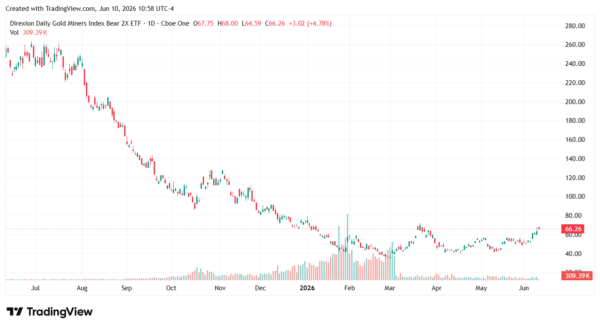
- Direxion Daily Gold Miners Index Bear 2x Shares ETF (NYSEARCA: DUST): With an expense ratio of 0.93%, the Direxion Daily Gold Miners Index Bear 2x Shares ETF returns 200% of the inverse of the performance of the NYSE ARCA Gold Miners Index.
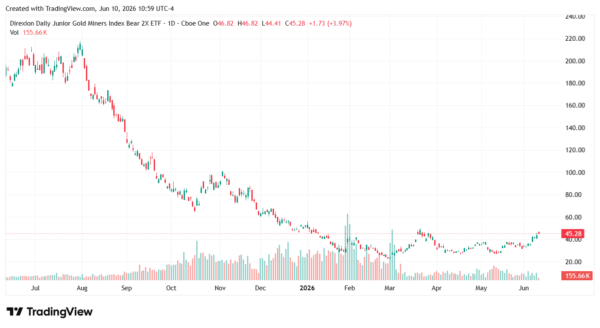
- Direxion Daily Junior Gold Miners Index Bear 2x Shares ETF (NYSEARCA: JDST): With an expense ratio of 0.89%, the Direxion Daily Junior Gold Miners Index Bear 2x Shares ETF returns 200% of the inverse of the performance of the MVIS Global Junior Gold Miners Index.
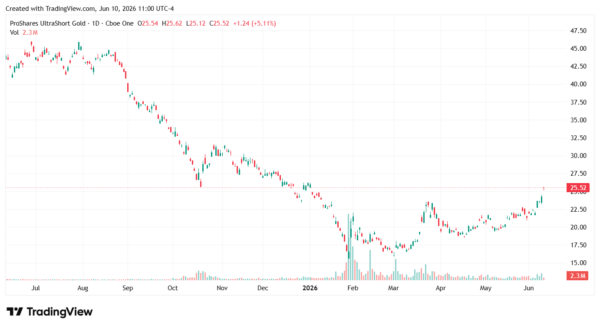
- ProShares UltraShort Gold ETF (NYSEARCA: GLL): With an expense ratio of 0.95%, the ETF seeks to return 200% of the inverse of the performance of the Bloomberg Gold Subindex. It has also been in a solid downtrend because of gold’s solid uptrend.
Long-Term Bull Case Remains Intact
At the same time, there are reasons to be bullish on gold.
For example, JPMorgan says gold prices could test $6,300 in 2026, thanks to an increase in central bank buying. Goldman Sachs is also bullish on gold with a year-end forecast of $5,400 per troy ounce “after increasing its estimates for central bank demand and predicting that official-sector purchases will continue accelerating throughout the remainder of 2026,” as reported by InvestorsHub.com.
“Looking further ahead, Goldman expects central bank buying to average around 60 tonnes per month through 2026. The bank pointed to findings from its own central bank survey that showed ‘strong underlying interest in gold,’ adding that recent geopolitical tensions “are likely to reinforce diversification over time — both for central banks and private investors.”
Short-Term Weakness, Long-Term Opportunity
While Citi’s warning of a potential 20% decline by September may sound alarming, it reflects growing concerns that the precious metal has become vulnerable after a substantial run-up and amid rapidly changing geopolitical dynamics.
That said, short-term corrections are not uncommon in long-term bull markets. For investors with a longer investment horizon, any weakness in gold could ultimately present an opportunity rather than a reason to abandon the sector altogether.
Leave a Reply