Walmart (NASDAQ: WMT) sold more than Wall Street expected, earned a little more than analysts predicted, and raised its forecast for the year. In the third quarter of its 2027 fiscal year, Walmart earned an adjusted 65 cents per share, a penny above the analyst consensus. Revenue rose 5.2% to $188.84 billion, beating expectations of $187.27 billion. The retailer also entered the report up roughly 13% for the year, and its main U.S. business delivered comparable sales growth right in line with expectations.
Table of Contents
The figures that deserve a closer look are in the company’s digital business. Online sales rose 17% globally, and management said the business is becoming more profitable. That combination could matter far more to investors over time than a one-cent earnings beat.
Walmart’s Stores Are Helping It Sell More Online
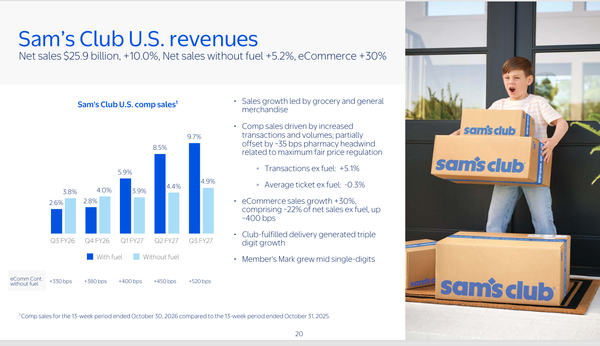
Online sales grew 23% at Walmart U.S. and 30% at Sam’s Club U.S. Much of that growth came from pickup and delivery orders filled by local stores. For shoppers, that means they can buy groceries, household supplies, or holiday gifts without walking the aisles. For Walmart, it means a store can serve more customers by doing double duty as a pickup and delivery hub.
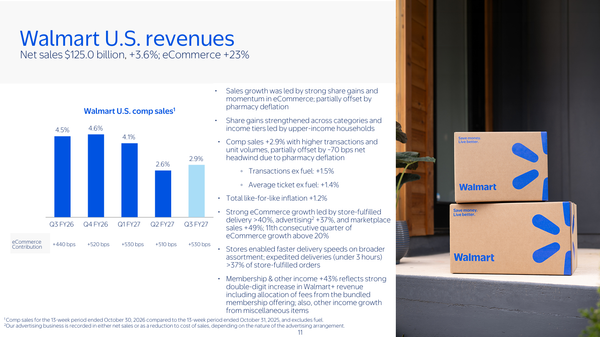
Chief Financial Officer John David Rainey credited faster delivery and lower prices for helping Walmart win business. He said the company recorded its biggest grocery market share gains in three years. That matters heading into the holidays because groceries bring shoppers back regularly. Every order is another chance to sell them something beyond food.
Advertising is also becoming a bigger part of the business. Sales in Walmart’s U.S. advertising operation rose 37% during the quarter. The logic is simple. Brands pay to get in front of customers who are already shopping, and Walmart can earn advertising revenue from the same visit that generates a grocery or household order.
Lower Prices Are Helping Win Grocery Shoppers
Walmart rolled back prices on nearly 8,000 products during the quarter. With food and gas still putting pressure on household budgets, discounts can give shoppers a reason to move more of their weekly spending to Walmart.
Keeping those prices low comes with challenges. CEO John Furner said diesel costs came in higher than expected, adding to the expense of moving goods. Tariff refunds helped offset some of that pressure. The holiday quarter will offer a better look at how Walmart balances discounts shoppers can see with transportation costs they rarely think about.
Walmart’s largest U.S. business generated $125 billion in net sales, up 3.6% from a year earlier. Comparable sales excluding fuel increased 2.9%, matching Wall Street’s estimate. Meanwhile, companywide reported net income fell to $4.95 billion from $6.14 billion a year earlier. So, while Walmart cleared the adjusted earnings bar, reported profit was lower than it was a year ago.
Sam’s Club Provides Another Way to Grow
Sam’s Club posted $25.9 billion in net sales, up 10% from a year earlier, with gains in groceries and general merchandise. Walmart is also giving shoppers the option to buy a combined Walmart+ and Sam’s Club membership. The idea is to give households a reason to use both businesses, whether they’re stocking up at the club or ordering dinner ingredients for delivery.
Furner told CNBC the joint offer had brought roughly two million new people into Sam’s Club since its late-October launch. Rainey said customers using the combined membership were already spending more. Global membership fee revenue rose 17% for the quarter.
Over time, the value of the new offer will depend on how often those members shop and whether they renew.
What Investors Should Watch During the Holidays
Walmart now expects full-year net sales to rise 4.9% to 5.2%, up from its previous forecast of 4% to 5%. It also lifted its adjusted earnings outlook to $2.84 to $2.89 per share from $2.80 to $2.87. The company expects adjusted operating income to grow 8% to 8.6%, compared with its earlier range of 7% to 8.5%.
Rainey said the holiday quarter was off to a good start. The next test is how much Walmart earns from the extra business it’s bringing in. Grocery discounts and fast delivery can win customers, but both carry costs. Advertising and membership fees give the company more ways to make money from those same shoppers.
For shareholders, that’s the part of the story worth following after the initial stock drop. If shoppers keep coming back for low prices and convenient delivery, and more of those visits turn into profitable sales, the holiday quarter could tell investors more about the company’s momentum than this quarter’s narrow earnings beat.
Leave a Reply