
With oil prices surging amid escalating geopolitical tensions surrounding the ongoing U.S.-Iran conflict, airline stocks have come under intense pressure. In fact, investors have become concerned about a potential slowdown in global travel demand, as well as the more extreme possibility of airspace disruptions or grounded flights if the conflict worsens.
Table of Contents
Adding to the strain, jet fuel costs have skyrocketed—rising roughly 85% since the conflict began. Fuel is one of airlines’ largest operating expenses, and this dramatic increase puts immediate pressure on profitability. To offset these higher costs, many airlines have begun raising ticket prices, passing the burden directly onto consumers. However, higher fares can dampen demand, especially for leisure travel, creating a difficult balancing act for the industry.
Despite these headwinds, not all airlines are equally vulnerable. According to analysts at Citigroup, Delta Air Lines and SkyWest stand out as two of the least sensitive carriers when it comes to rising oil prices and economic uncertainty.
Airline Stocks to Buy: Delta Air Lines
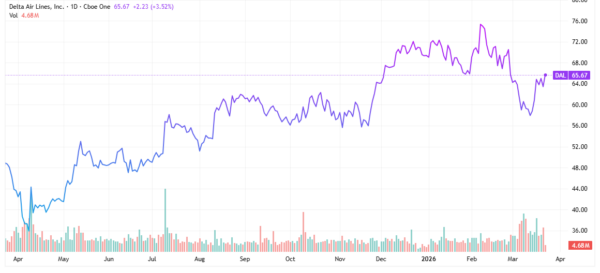
Delta Air Lines (NYSE: DAL) has earned a “Buy” rating from Citi, which has also placed the stock on a 30-day catalyst watch. One of Delta’s most significant competitive advantages lies in its ownership of the Trainer Refinery, a 185,000-barrel-per-day petroleum facility located in Trainer, Pennsylvania. Operated through its Monroe Energy subsidiary, this refinery supplies approximately 75% of Delta’s jet fuel needs. This level of vertical integration is rare in the airline industry and provides Delta with a substantial hedge against volatile fuel prices.
In addition to its fuel strategy, Delta boasts the highest pre-tax profit margin among major U.S. airlines. This strong margin profile acts as a financial cushion, helping to mitigate earnings-per-share (EPS) sensitivity during periods of rising costs. Furthermore, Delta generates a significant portion of its revenue—estimated in the high teens percentage—from transatlantic routes, making it one of the leading players in international travel, second only to United Airlines.
For long-term investors, this pullback may present an opportunity. While waiting for a recovery, shareholders can also benefit from Delta’s dividend. The company recently declared a quarterly dividend of $0.1875 per share, reinforcing its commitment to returning capital to investors even in a challenging environment.
Airline Stocks to Buy: SkyWest
SkyWest (NASDAQ: SKYW) also offers a compelling investment case. Like Delta, SkyWest maintains strong pre-tax margins, which help buffer against economic shocks and rising operating costs. However, its primary advantage lies in its business model.
SkyWest operates under Capacity Purchase Agreements (CPAs) with major carriers, including United Airlines and American Airlines. Under these agreements, SkyWest is paid to operate flights on behalf of its partners, and crucially, those partners typically reimburse SkyWest for fuel costs. This arrangement effectively shields the company from fuel price volatility—one of the biggest risks currently facing the airline industry.
Because of this structure, SkyWest’s financial performance is less directly tied to fluctuations in oil prices compared to traditional airlines. As a result, it remains relatively insulated from the recent surge in fuel costs.
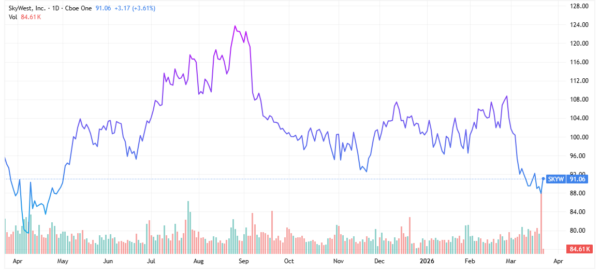
Like Delta, SkyWest’s stock has also experienced a pullback, dropping from around $111 to a low of $86.89. However, shares have begun to stabilize and show signs of recovery. At a recent price of $91.76, there is potential for the stock to climb back toward previous highs if market conditions improve and investor confidence returns.
The Right Airline Stocks Can Soar in Any Environment
While the airline sector as a whole faces significant challenges from rising oil prices, geopolitical uncertainty, and shifting travel demand, airline stocks like Delta Air Lines and SkyWest appear better positioned to weather the storm. Delta’s vertical integration and strong margins, combined with SkyWest’s fuel-protected contractual model, give both airlines a degree of resilience that many competitors lack.
For investors willing to navigate short-term volatility, these airline stocks could offer attractive opportunities—especially if oil prices stabilize and global travel demand begins to recover.
Leave a Reply