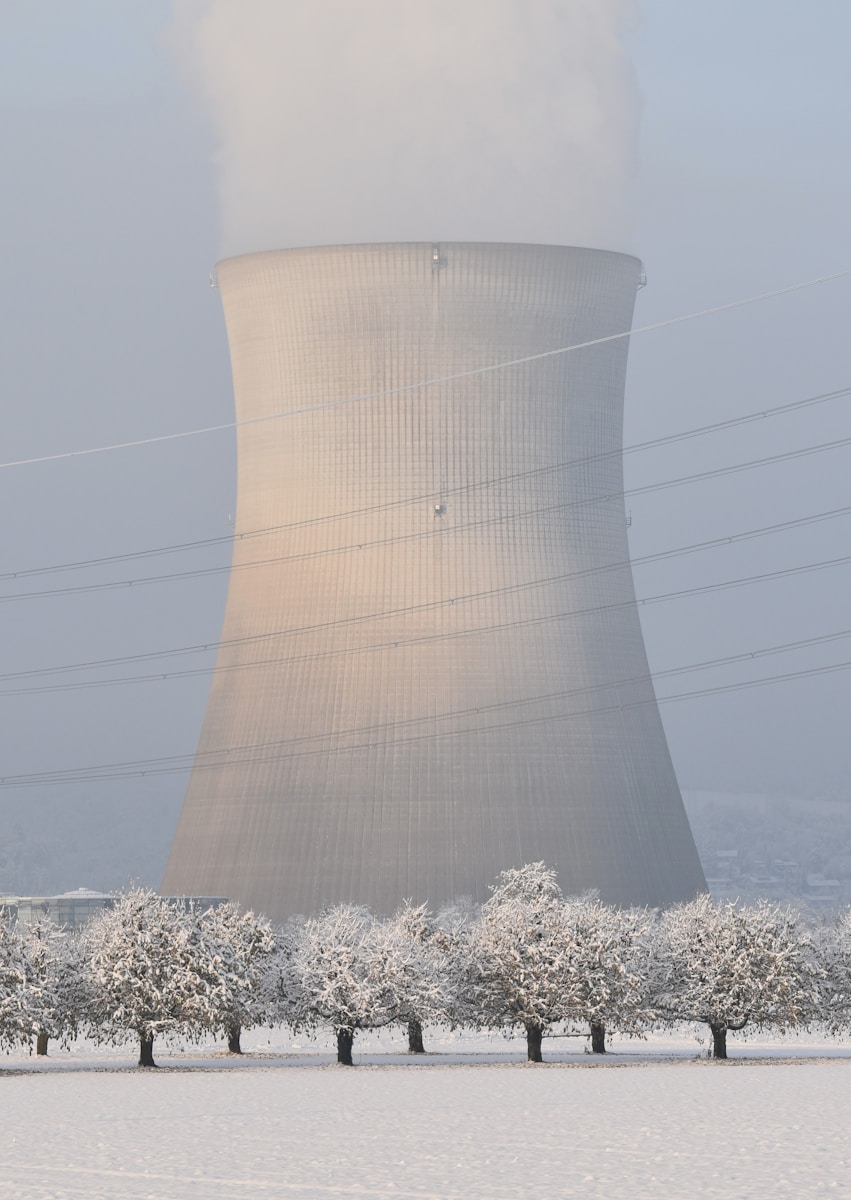
Nuclear power demand is accelerating at a pace few investors expected just a year ago. You see, artificial intelligence is doing more than fueling upside in tech stocks. It’s reshaping global electricity markets, and nuclear power is quickly becoming one of the most attractive long-term solutions.
Table of Contents
As data centers scale to support AI workloads, electricity consumption is rising far faster than utility planners anticipated. According to Reuters, “some power companies are projecting electricity sales growth several times higher than estimates just months earlier.
Nine of the top 10 U.S. electric utilities said data centers were a main source of customer growth, leading many to revise up capital expenditure plans and demand forecasts.” That shift is putting pressure on grids to find clean, reliable, and always-on sources of power. All of these are areas where nuclear energy stands out.
The momentum accelerated further when Meta Platforms Inc. (NASDAQ: META) announced plans to secure roughly 6.6 gigawatts of nuclear power by 2035 to support its expanding data center footprint. One agreement involves Vistra (NYSE: VST), which will provide electricity from three existing nuclear plants, while another advances Oklo Inc.’s (NYSE: OKLO) plan to develop a 1.2-gigawatt power campus in Ohio.
AI is Central to Understanding Demand for Nuclear Power
Uranium fundamentals have tightened meaningfully over the past several years. Years of underinvestment following the Fukushima disaster left the industry with limited new production, while long-term contracting activity among utilities has been picking up. As more countries extend the life of existing reactors and pursue new nuclear capacity to meet decarbonization goals, uranium demand is expected to grow steadily.
At the same time, the AI-driven data center boom is adding a new structural layer of demand. Nuclear energy’s ability to deliver baseload power without carbon emissions makes it uniquely suited for hyperscale computing. For investors who believe nuclear power demand will remain elevated for years, URA offers a straightforward way to participate in both the fuel cycle and the broader nuclear infrastructure buildout.
With nuclear power demand now tied directly to AI infrastructure buildouts, investors are increasingly looking for efficient ways to gain exposure. For many, nuclear-focused ETFs offer a diversified and liquid solution.
Global X Uranium ETF: Broad Exposure to Nuclear Fuel
For investors seeking diversified access to the nuclear supply chain, the Global X Uranium ETF (NYSEARCA: URA) offers one of the most established vehicles in the space. With an expense ratio of 0.69%, URA tracks companies involved in uranium mining, exploration, refining, and the manufacturing of nuclear components. Rather than betting on a single stock, investors gain exposure across roughly 50 companies tied to the uranium and nuclear ecosystem.
URA’s portfolio includes well-known industry names such as Cameco Corp. (NYSE: CCJ), NexGen Energy (NYSE: NXE), Uranium Energy Corp. (NYSEAMERICAN: UEC), Paladin Energy (OTCMKTS: PALAF), Denison Mines Corp. (NYSEAMERICAN: DNN), and NuScale Power (NYSE: SMR). This mix provides a blend of established producers, emerging developers, and next-generation reactor technology firms. That balance can be particularly attractive in a market where demand is rising, but supply remains constrained.
VanEck Uranium and Nuclear ETF: Higher Concentration, Higher Torque
The VanEck Uranium and Nuclear ETF (NYSEARCA: URNM) provides a slightly different approach for investors seeking nuclear exposure. With a lower expense ratio of 0.56%, the URNM ETF is more concentrated than URA and tilts more heavily toward uranium miners and developers. This structure can offer greater upside potential when uranium prices are rising, though it may also increase volatility during downturns.
URNM holds many of the same core names found in URA, including Cameco, NexGen Energy, Denison Mines, and Uranium Energy. However, it places a larger emphasis on pure-play uranium producers and royalty-style exposure to the underlying commodity. As a result, URNM tends to track uranium price movements more closely than broader nuclear ETFs.
That focus could be particularly advantageous in the current environment. Utilities are increasingly returning to long-term uranium contracting to secure supply, a trend that historically supports higher prices. Meanwhile, geopolitical concerns and supply concentration, particularly in regions like Kazakhstan and parts of Africa, add an additional risk premium to the uranium market.
The AI-driven surge in electricity consumption adds another demand catalyst that did not exist in previous nuclear cycles. Meta’s agreements with Vistra and Oklo highlight how large technology firms are now directly engaging with nuclear operators to secure future capacity.
As more hyperscalers follow suit, the pressure on uranium supply chains could intensify. For investors willing to accept higher volatility in exchange for potentially higher returns, URNM offers a compelling way to express a bullish view on nuclear power demand.
Risks to the Thesis: Policy, Timing, and Market Cycles
Despite the strong tailwinds, investing in nuclear-focused ETFs is not without risk. One key uncertainty is regulatory and political support. While nuclear energy is gaining acceptance as a clean power source, policy changes, permitting delays, or public opposition could slow new project development. Small modular reactors and next-generation designs, such as those pursued by Oklo, still face commercialization and licensing hurdles.
Commodity cycles also pose a risk. Uranium prices can be volatile, and periods of oversupply or reduced utility contracting could pressure miners and developers. Because ETFs like URNM are heavily tied to the uranium price, they may experience sharper drawdowns during downturns in the commodity cycle.
Finally, the pace of AI-driven demand growth is not guaranteed. A slowdown in data center expansion, shifts in computing efficiency, or breakthroughs in alternative energy storage could reduce the urgency for nuclear capacity. While long-term fundamentals remain attractive, investors should recognize that nuclear ETFs are best suited for those with a multi-year time horizon and a tolerance for near-term volatility.
Conclusion: A Simple Way to Ride the Nuclear Power Revival
Nuclear power demand is no longer a niche theme—it is becoming a cornerstone of the global energy transition and the AI infrastructure buildout. With hyperscale data centers driving unprecedented electricity demand and major corporations committing to long-term nuclear contracts, the outlook for uranium and nuclear energy has undergone a fundamental shift.
For investors seeking exposure without the risks of picking individual stocks, ETFs provide a practical solution. The Global X Uranium ETF (URA) offers broad diversification across the nuclear value chain, while the VanEck Uranium and Nuclear ETF (URNM) delivers more concentrated, higher-octane exposure to uranium producers. As AI, decarbonization, and energy security converge, nuclear-focused ETFs may be one of the most efficient ways to participate in this powerful and accelerating trend.
Leave a Reply